

Why Mice Move Indoors in Autumn, and Why the Timing Matters
If you’re wondering how to keep mice out of house in winter, the honest answer starts months before the cold arrives, not after. Mice do not wait for the first snow.
As overnight temperatures drop in Montgomery County, the outdoor food mice rely on, seeds, insects, garden scraps, thin out at the same time. A cozy home with pet food and crumbs left out solves both problems at once, and mice find that opportunity fast.
The work has to happen before that pressure arrives, not after you hear scratching in the wall. Once the winter months settle in, mice are already searching for shelter, and sealing gaps at that point is a race you lose.
Homeowners who avoid a winter mouse problem did the boring work in September. The ones who reacted in December are already behind. This fall timeline is one piece of a full rodent control strategy for your home, and it’s the piece that matters most before the first cold snap.
Your Fall Mouse-Proofing Timeline

This is the part most articles about how to keep mice out of your house skip. A deadline works better than a checklist, so here’s one built around the Pennsylvania fall.
Walk the outside of your house while it’s still warm enough to crouch down at the foundation line without regretting it. Look for cracks and gaps where utility lines, pipes, and wires enter the house, along the foundation-to-siding joint, and around basement windows.
On older Collegeville homes with stone or fieldstone foundations, check the mortar joints specifically. Gaps there get missed during a standing walk-through, and they’re common on the older housing stock across this part of Montgomery County.
Pick up steel wool, caulk or spray foam, and copper mesh or hardware cloth for anything larger than a small hole. Order door sweeps now if your exterior doors or garage threshold show visible daylight underneath them. Don’t forget the roof line and soffits either, since gaps up high get missed as often as gaps at the foundation. Waiting until October to shop for these means shopping at the same time everyone else in the county is.
This is the window where the mouse-proofing happens. Pack steel wool tightly into small gaps, then run caulk around it to hold it in place, since steel wool alone works loose over time.
For larger openings, cut hardware cloth or metal sheeting to fit. Install door sweeps and check weather stripping on every exterior door, not just the front one.
Outside, move wood piles and leaf piles away from the house and off the ground rather than stacking them against the siding. Cut back grass, brush, and dense ground cover along the foundation line. Detached garages need the same attention as the main house, especially on the wooded lots common around Collegeville.
Missing this window doesn’t erase your chances, but it moves the sealing work onto a tighter clock. A missed gap in November is a harder thing to trace once the weather turns.
Once the sealing is done, the job shifts to watching. Check the areas you sealed every week or two for fresh gnaw marks or droppings. Keep an eye on basements, attics, and crawl spaces you wouldn’t otherwise walk through.
Doing this check in a cold, half-lit basement at 6pm on a weeknight isn’t most people’s idea of a good time, but it’s the difference between catching one gap early and dealing with a nest in January.
If you notice fresh activity in a spot you already sealed, that’s useful information, not a failure. It points to a gap somewhere nearby that you missed.
The Four Things That Actually Keep Mice Out
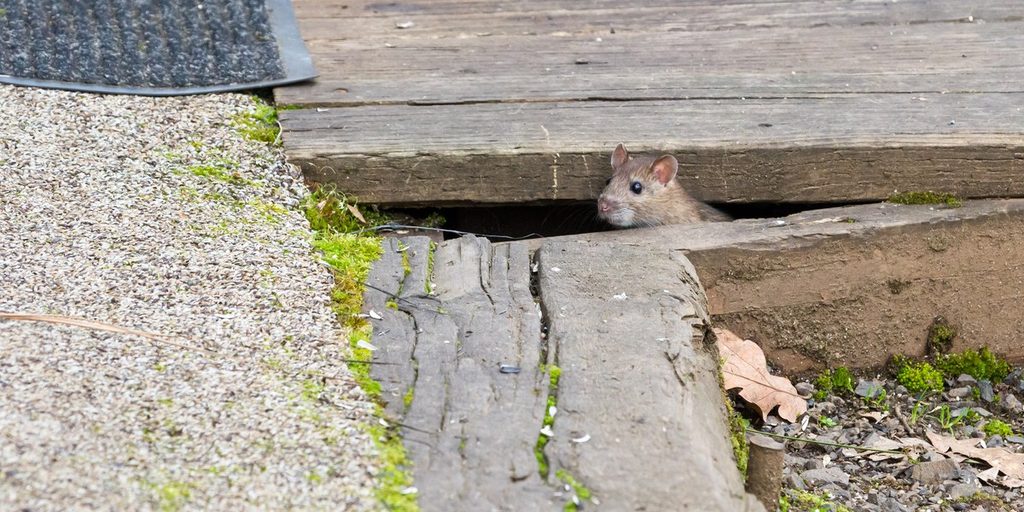
Sealing works because it removes the way in, not because it treats the mouse. Four things protect your home’s foundation from unwanted visitors, and our full walkthrough of the exclusion technique covers the details of each.
Seal gaps at the foundation line and everywhere a utility line or pipe passes through a wall, including the roof and floors where pipes run through.
Penn State Extension notes that a mouse fits through a hole about the size of a dime or a pencil, a gap that comes out to roughly a quarter inch, or 6 millimeters, in diameter.
Steel wool packed into small gaps and backed with caulk handles most of these. Copper mesh, hardware cloth, or metal sheeting covers anything bigger, making the repair rodent-proof rather than a temporary patch.
Install door sweeps and check garage thresholds. An unsealed exterior door is an open invitation.
Clear outdoor harborage. The CDC recommends keeping grass and shrubbery trimmed and moving wood piles at least 100 feet from the house, since a wood pile stacked against the siding gives mice cover and a staging point.
Remove indoor food and nesting access. Store food, including pet food, in airtight containers made of hard plastic, metal, or glass, and clean up spilled food and crumbs before they sit overnight. Leaving cereal boxes open on a shelf does the same damage as leaving food on the counter. A good rule for any room in the house: if you wouldn’t leave it out for other pests like ants, don’t leave it out for mice either.
What this means for your home: A gap the width of a pencil is all it takes, so the foundation walk-through in early September matters more than any single product you buy afterward.
Does Peppermint Oil Repel Mice?
No, peppermint oil, ultrasonic devices, and similar consumer remedies do not repel mice with any durable result, whatever the packaging claims. Mice get used to sound and smell deterrents fast, and neither approach seals the entry point that lets them in.
Traps have a place for mice already inside your house. They do nothing about the crack the next mouse chews open, which is why traps alone produce a string of caught mice all winter, not a solved problem.
If you’ve tried the spray-and-hope route already, you’re not alone. It means the product was never built to fix the entry point itself, and a cat wandering the yard won’t fix it either.
When Should You Stop Doing This Yourself?
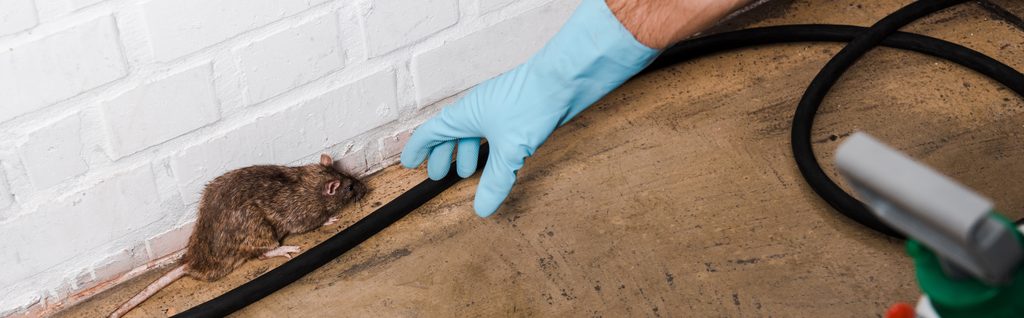
Call in a professional rodent inspection at one of three points, rather than buying more steel wool and hoping. You cannot find the entry point, or you can see it but cannot safely reach it, especially with older stone foundations where gaps sit behind landscaping or below grade.
You keep hearing activity weeks after sealing what you could find. That points to an interior population already established or a route you haven’t located. Or your property has a crawlspace, unfinished basement, or attic access that has never had a real inspection, and a gap in any of these spots sits unnoticed for a season or more.
A professional rodent inspection checks all the areas above from the outside in, finds gaps a walk-through misses, and follows an integrated pest management approach, IPM for short, that puts exclusion and prevention first, before any chemical treatment. Prevent rodents from turning a single missed gap into a house-wide problem: Terra Pest Management’s professional rodent control is built around exactly this kind of fall inspection, before the first cold snap sends mice looking for a way in.
According to the CDC, rodents can contaminate indoor surfaces through their droppings and urine, making early fall exclusion the cleanest and most practical way to protect your living space.
What Should You Do If Mice Are Already Inside?
Point yourself toward detection and removal instead of prevention once you’re already hearing or seeing mice. Our guide on how to tell if mice got into your home covers the signs to look for.
Once you’ve confirmed they’re already in, our guide to getting rid of mice already inside covers safe removal.
Come back to this fall timeline once they’re out, so next winter isn’t a repeat.